Invisible UV-readable TIJ ink for covert anti-counterfeit codes
Invisible UV-readable TIJ ink prints a mark that stays hidden under normal light and becomes readable under ultraviolet inspection light. Buyers use it for covert product codes, document checks, and anti-counterfeit marks that should not compete with visible branding. It is not the same product family as UV-curable TIJ ink, which needs a curing lamp to form a durable film.
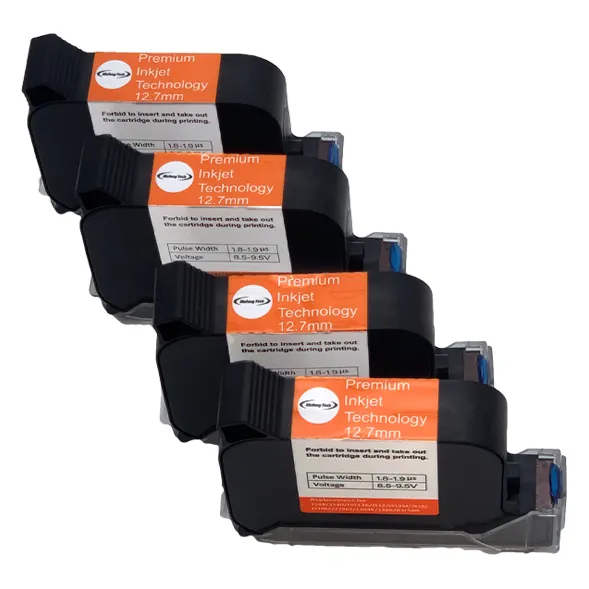
MufengTech lists a dedicated Cartucho de tinta invisible TIJ in its TIJ cartridge range. This guide covers selection, inspection planning, and the evidence you need before calling a covert code “approved.” It does not invent lamp wavelengths, certifications, or resistance claims that the public product page does not state.
Separate invisible UV-readable ink from UV-curable ink
Invisible UV-readable ink is about detection. The printed information is intended to stay unseen under ordinary lighting and to show clearly under ultraviolet light. That inspection light reveals the mark; it is not described on the product page as a curing process.
UV-curable TIJ ink is about film formation. The Cartucho de curado UV needs a matched curing source and process validation. Yesterday’s solvent-versus-UV curing decision remains a different workflow. Do not order an invisible cartridge when the line problem is adhesion after handling, and do not order a UV-curable cartridge when the requirement is a covert mark under normal light.
If a buyer says “UV ink,” ask which outcome they need: a hidden inspection mark, a cured visible mark, or both as separate stations. Keep the SKUs, lamps, and acceptance tests separate on the enquiry sheet.
Use the published invisible-cartridge details as the starting shortlist
The invisible product page lists two blue models:
| Modelo | Tipo de tinta | Listed colour | Volumen | Altura de impresión | Listed drive notes |
|---|---|---|---|---|---|
| 2MKBL515 | Water based | azul | 42 ml | 12.7 mm / 0.5 in | Firing voltage 11 V; pulse width 2.1 μs |
| 2MKBL516 | Solvent based | azul | 42 ml | 12.7 mm / 0.5 in | Firing voltage 9.6 V; pulse width 1.6 μs |
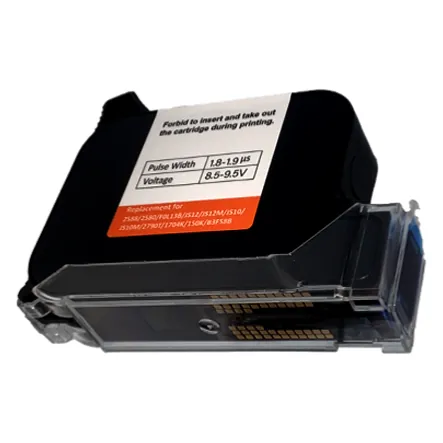
Both entries list a 12-month warranty on the product page. Treat those parameters as identification aids for an enquiry. Ask MufengTech to confirm the current data sheet, controller recognition, and approved drive profile for the supplied batch. Matching physical size alone does not prove a handheld or online printer can run the cartridge.
Choose water-based or solvent-based only after the substrate is known. Absorbent paper and suitable cartons may favour a water-based route. Non-porous films and coated packs usually need a solvent trial. The page’s adhesion and temperature-resistance statements are product descriptions, not a substitute for tests on the customer’s material.
Plan inspection before you approve the artwork
A covert code is only useful if the inspection method is defined. Agree who checks the mark, where the check happens, and what “readable” means after handling, packing, and storage.
Ask the supplier which ultraviolet inspection approach they recommend for the exact ink. The public invisible-cartridge page states that the printed information shows clearly under ultraviolet light. It does not publish a specific lamp class, wavelength, intensity, distance, or duty cycle. Do not invent a 365 nm or other lamp specification in customer documents. Write “confirm inspection lamp requirements with the supplier” until written guidance is provided for the batch.
Also decide whether the mark must remain invisible under warehouse lighting, store lighting, and photography. Some covert projects fail because the mark is faintly visible on dark or glossy packs even before UV inspection. Test on the real colour and finish.
Build an anti-counterfeit trial checklist
Collect these items before requesting samples:
- Purpose of the covert mark: brand protection, document verification, spare-part authentication, or internal process control.
- Exact print location and whether a visible code will sit nearby.
- Substrate, coating, colour, and any varnish or overwrap after printing.
- Required code content: text, serial, barcode, or logo elements within the 12.7 mm swath.
- Printer model, controller profile, and whether the head is handheld or online.
- Inspection process owner, lighting conditions, and pass/fail photo examples.
- Any destination-market claims the buyer wants to make about anti-counterfeiting performance.
Do not advertise regulatory approvals, security certifications, or guaranteed anti-counterfeit outcomes that the supplier has not documented. “Efficient anti-counterfeiting” on a product page is a feature description, not a certificate number.
Run the trial under production-like conditions
Print on production material at realistic speed and gap. Inspect immediately and after the next handling steps. Check whether the mark remains hidden under normal light and readable under the agreed ultraviolet inspection method. Repeat after storage if the customer cares about later warehouse checks.
Compare water-based and solvent-based candidates only when both are plausible for the surface. Keep a visible solvent or water-based cartridge available as a setup reference if the line team needs an easy alignment mark during commissioning, then switch to the invisible SKU for the approved process. Do not mix drive settings between formulations.
Order with a complete covert-coding request
Correo frank@szmufeng.com with the printer model, substrate samples, artwork, and the intended inspection method. Ask for a confirmed choice between 2MKBL515 and 2MKBL516, the controller profile, sample plan, and written inspection guidance. Keep curing-lamp projects on a separate request if the line also needs UV-curable ink.
For visible everyday coding, start from the black solvent quick-drying cartridges. For equipment selection around tall or multi-line marks, review the machines on szmufeng.com. The next step is a documented covert-code trial, not a generic “UV ink” purchase order.
FAQ: Invisible UV-readable TIJ ink for covert anti-counterfeit codes
Is invisible UV-readable TIJ ink the same as UV-curable TIJ ink?
No. Invisible UV-readable ink is detected under ultraviolet inspection light. UV-curable ink needs a curing source to form its film. Keep the SKUs and process requirements separate.
Which invisible models does MufengTech list?
The product page lists water-based 2MKBL515 and solvent-based 2MKBL516. Both are blue, 42 ml, and 12.7 mm print height. Confirm controller support before ordering.
What ultraviolet lamp should I specify for checking the mark?
The public product page does not publish a lamp wavelength, dose, or distance. Confirm the inspection method with MufengTech for the exact ink batch instead of assuming a lamp class.
Can I claim a certified anti-counterfeit system from the cartridge page alone?
No. Use the cartridge as a consumable candidate, then document the printer setup, inspection process, and any customer-specific security requirements. Do not invent certifications.
Written by the team at Shenzhen Mufeng Technology Limited Company. WhatsApp: +86 158 1405 1051